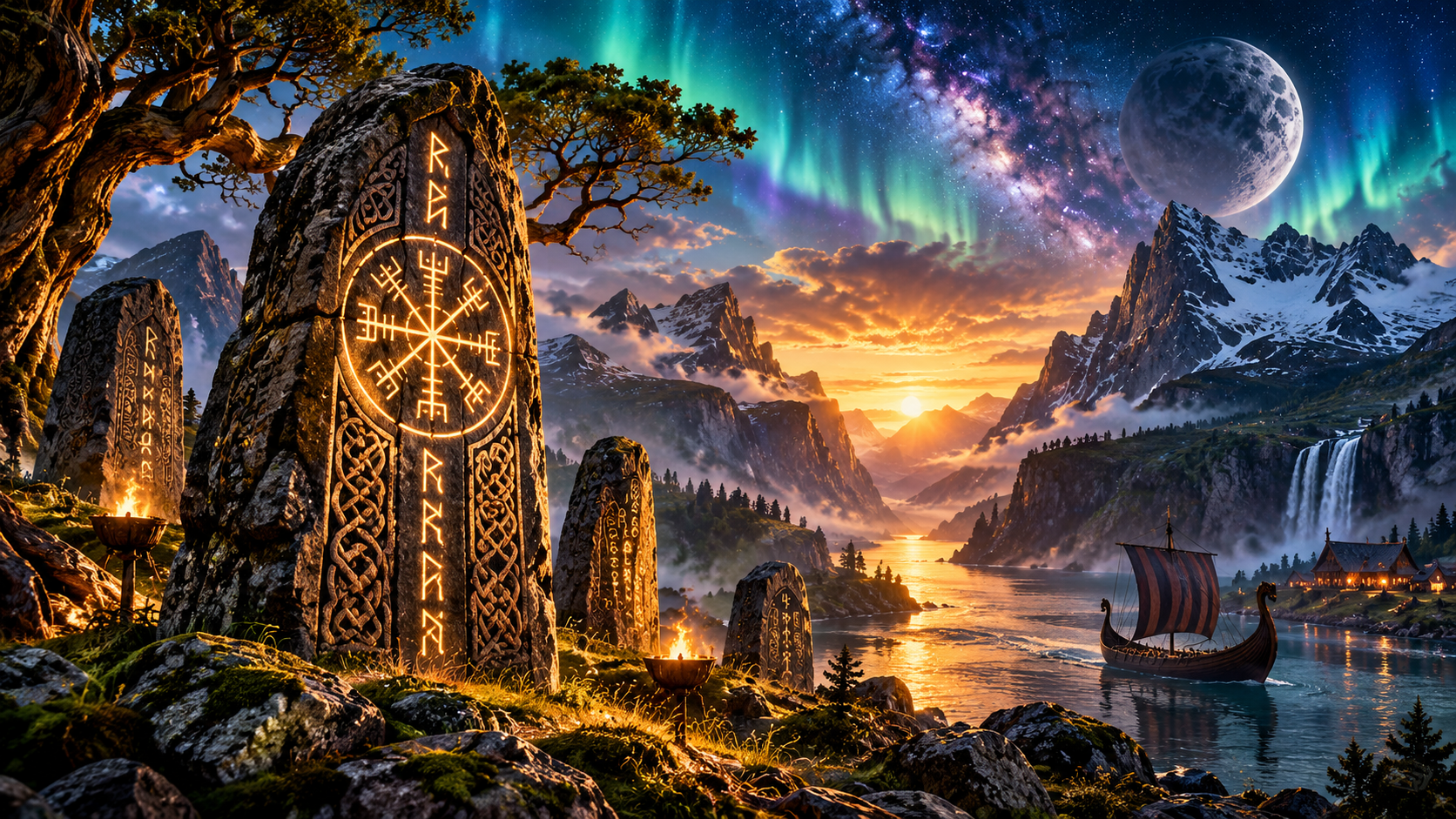
Runes were letters before they were modern oracle symbols
An inscription cut into wood or stone can preserve a name, a memory or a message. Runes were used across Scandinavia long before the Viking Age, so the familiar phrase “Viking runes” covers several centuries and evolving scripts. Understanding those scripts makes the stories surrounding them more compelling without converting every inscription into an ancient prophecy.
Elder Futhark: the earlier twenty-four-rune row
The older runic alphabet conventionally called Elder Futhark had twenty-four signs. The Swedish History Museum describes the appearance of runic writing in the first centuries CE, many hundreds of years before the familiar Viking-Age memorial stones. Archaeological objects preserve names and short phrases, demonstrating how writing, social identity and material culture intersected.
Younger Futhark: the sixteen-rune Viking-Age script
The common Viking-Age rune row was reduced to sixteen characters. Its signs could represent multiple speech sounds, complicating interpretation by modern readers. Viking-Age runestones often commemorated relatives, announced journeys or displayed social position. That is why presenting all twenty-four Elder Futhark symbols as the standard writing system of Viking raiders would be historically inaccurate.
Odin and the search for runic knowledge
In Hávamál, a poetic text preserved through medieval transmission, Odin hangs from a tree for nine nights and gains knowledge of runes. Mythological storytelling and archaeological evidence answer different historical questions. Museum interpretation also notes that what survives of Norse mythology was often written down later, so care is needed when projecting specific stories unchanged onto all Viking-Age communities.
Were the runes used for divination?
Some evidence points to special or protective uses of runes, but the detailed personalized rune spreads widely promoted today are not securely documented as a universal Viking-Age practice. The National Museum of Denmark distinguishes literary accounts of runic magic from the much less certain evidence for actual historical rituals. Present-day rune readings should therefore be identified as modern symbolic explorations.
Explore the northern traditions responsibly
ORACLASTRA’s rune pages invite readers to encounter inscriptions, mythology and symbolic themes. Start with the existing rune experience, and treat any reflective reading as contemporary rather than as a newly discovered ancient birth chart. For another tradition with carefully distinguished historic and modern elements, explore the Maya calendar article.
Explore ORACLASTRA’s rune universe →
Continue reading: Maya calendar explained · Ancient Egyptian calendar and decans.
Editorial note: Historical research, literary myth and ORACLASTRA’s modern symbolic creations are explicitly distinguished. Cultural traditions are diverse and should not be reduced to a single reconstructed “ancient horoscope.”